Each manufacturing company will have their own procedures when it comes to its overall production process. Certain aspects of production will be like others. Whether in the same industry or a different one. The way your products are created will be relatively unique to your items. This means that there is not an optimal one-size-fits-all method for every manufacturing line. Finding ways to improve the efficiency of your line is essential. Here are some of the steps you can take to improve your manufacturing process for increased efficiency.
Improve Your Company’s Processes
Just because you’ve always done something a particular way doesn’t mean it’s the best way to do things. Changing things up in your business is almost guaranteed to be met with some resistance, especially from the old-timers in your team. But in the long run, improving your processes to increase efficiency is very important for your continued success or growth. It’s worthwhile speaking to your team to figure out what they think could be improved as they will likely have much more insight into the current process than you will, especially those working on the factory floor, for example.
Assess Your Production Line
The production line itself is going to be the biggest focus for you when it comes to improving manufacturing efficiency. Spending time assessing each and every aspect of this may be time-consuming, but it may be worthwhile in the long run. This will allow you to figure out where issues are happening that might be reducing your business’ efficiency, such as bottlenecks and other things that can cause delays and allow you to start figuring out ways to make things run smoother.
Make Use Of Data Analysis
A data analyst is one of the most important additions to any team today, and this is no different for manufacturing. While there will be different data sets to assess in your business compared to others, a lot can be done with the data taken from your business processes, such as timings, stock levels, and yields. Training a data analyst for your team by sponsoring them for a data analysis management course can be a very clever decision. This employee will then learn the skills necessary to assist you in implementing new and improved processes based on the data they can gather.
Conducting Regular Maintenance
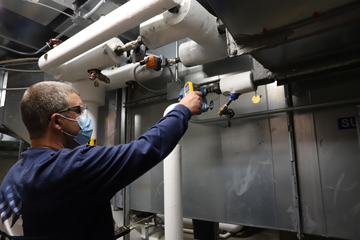
In manufacturing, there’s nothing more concerning or potentially devastating than a breakdown of one of your machines. While some smaller broken parts can be replaced quickly, and certain smaller machines can be switched with backups, larger machines breaking might require a lot more time and attention. This is why it’s important to have some regular maintenance checks in place, as well as predictive maintenance in which you’ll have parts that might pose a higher risk of breaking, repaired or replaced so that you don’t have to worry about the whole line coming to a screeching halt. While this might seem like a costly precaution, you could easily lose much more of your revenue by waiting for something to break and then having to wait for an indeterminable amount of time for maintenance to arrive and replace it.
Innovations in Food (& Beverage) Processing & Packaging is a quarterly magazine distributed globally both in Print and Digital formats. www.innovationsfood.com. Twitter: @Innovfoodtech. Instagram: @innovationsinfoodtechnology. Linkedin: www.linkedin.com/in/terry-prior52