Tearing strips off food packaging problems
Sustainability has combined with other powerful trends to drive major changes in consumer packaging.
In addition to heightened regulatory and public concerns around single-use packaging waste, retailers are also proactively making bold commitments to improve the sustainability of their packaging.
All the top 100 FMCG companies (in terms of revenue) have made strong declarations and commitments to drive their packaging sustainability performance, with the lion’s share of emphasis on full recyclability and a significantly higher degree of recycled content, along with innovation and promotion of change in the use of packaging.
This serves to highlight that packaging converters with the right focus and innovation capabilities, particularly those that proactively embrace sustainability challenges, could experience significant growth and a host of new partnership opportunities.
Previously, a huge emphasis was placed on weight and material usage to improve costs, nowadays industry efforts to promote sustainability are led by a focus on high recyclability and recycled content.
So, what makes flexible packaging a resource-efficient packaging choice? For a start, minimising the use of materials is in its DNA, and it provides a lot of sustainability features. It aims to
deliver maximum effectiveness with the minimum environmental footprint.
Flexible packaging protects fresh and processed products from contaminants, oxidation, and microbial spoilage, while generally increasing shelf life and allowing for efficient transport of goods worldwide. But unnecessary packaging continues to create unwanted waste.
Demand for better pack functionality and openability
Flexible Packaging’s very low pack-to-product ratio means that, more often than not, even with no recycling, the flexible pack uses less material than an equivalent alternative more rigid pack formats, which can be highly recycled.
Convenience and ease of use, extended shelf life, food contact safety, environmental friendliness, branding, functionality, and adaptability, mean flexible packaging is used in almost all retail areas on both a domestic and global level.
From soups to cocktails, petfood to washing liquids, the industry is experiencing a major shift to flexible pouches for products that contain high liquid content. This option is both lightweight and convenient and enables innovative pack formats and graphic impact. These aspirational designs are increasingly contingent on the seamless integration of opening, closing, or reclosing functionality.
Industry efforts are centred around innovating to meet the emergent need for more reusable flexible formats, while also designing for recycling. But what about openability? And is it possible to maintain solid sustainability credentials while innovating around pack accessibility?
In 2013, Essentra Tapes launched its first-ever quantitative research to understand consumers’ views on packaging. It was clear that dissatisfaction was high. At the time, getting into the packaging was the major challenge for half of the respondents and over 80% highlighted annoyance when opening a pack.
Eight years later, we surveyed 1,000 UK consumers to get their updated views. Although there had been an 15% decrease in frustrations with packaging, over three-quarters of consumers still expressed frustration with packaging, and 57% of those put it down to it being difficult to open.
The message couldn’t have been clearer
Consumer frustrations with difficult-to-open packaging can severely impact a purchasing decision. Our sought-after solution, Supastrip, enhances brand loyalty by providing a positive, easy-opening experience, with additional brand owner value delivered by printing tapes and increased efficiencies during manufacturing.
Supastrip is designed to tear through a variety of flexible packaging formats, providing quick access to the product when the tape is pulled and is coated with a water-based, pressure-sensitive
adhesive, bonding instantly to flexible substrates without the need for solvents, hot wax or heating units.
New SupaStrip PCR takes things one step further, helping brands overcome technical and regulatory challenges to increase the volume of recycled content used in films and other plastic formats. A direct response to consumer demand for packaging sustainability and recycled content,
SupaStrip PCR is made from recycled PET and contains 70% post-consumer resin (PCR) in a single ply 23micron film.
It’s not just the tape that we provide, or the ink, we deliver a complete solution including the applicator that can be integrated into the production process, making it easier to apply the tapes to primary packaging, however complex the job or run length.
Household names stick with us
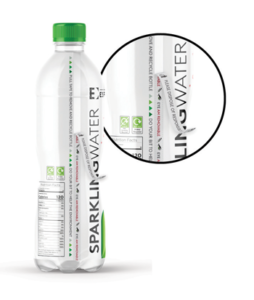
It could be facilitating the easy removal of shrink sleeves for consumers, with a tear tape enabling the segregation of the sleeve from the PET bottle to support recycling, or it could be building in easy access to biscuit packaging. Either way, our tapes can be applied to a range of products that use plastic or paper as the primary packaging across a wide range of FMCG applications from pet food to personal care or food-to-go to frozen categories. Its value lies in its multi-functionality, enabling pack easy opening along with the ability to communicate with the consumer at the point of use.
When packaging is designed well it provides huge benefits to the product itself, the brand, manufacturer, packer, retailer and consumer. A great example of the combined functionality our solutions can bring lies in the total tape solution we provided a leading European provider of sanitary products.
The move to printed SupaStrip presented the perfect opportunity to carry a range of different designs and messaging. Our high-definition print delivered spectacular results, helping to promote brand image while avoiding any customer frustrations with the opening of packaging, which can severely impact a repeat purchasing decision.
We have all struggled to open a tough blister pack or tie-wrapped box. Depending on the circumstances of each individual, the problems this cause can range from mild inconvenience to making daily life impossible. No company, brand or converter wants to make its products inaccessible to a single member of its consumer base. By not considering inclusive opening systems at the start of the design process though, this is exactly what many companies do.
SupaStrip’s easy-opening properties also mean that knives or other sharp implements are removed from the opening process thereby minimising the risk of product damage and possible personal injury.
Equally important, the tamper-evident nature of tear tape gives a clear indication if a product has been opened previously. Supastrip provides immediate visual tamper evidence and offers quick, easy consumer access to the product just by pulling the tape. For added convenience, the tear tape can be applied to the pack with a tab cut meaning the tab presents a prominent opening point too.
At Essentra Tapes, our printing expertise facilitates the creation of message tapes for brand reinforcement or promotional purposes – a cost- effective, flexible alternative to printing directly on the pack. For confectionery, tear tape can be applied to the vertical edge of the pack making it an ideal carrier for a brand or a product promotion or be used to replace string used to tie and open the paper sacks used for dry pet food or cat litter products.
Switching to renewably sourced packaging alternatives is just one small change for businesses but a substantial change to our plastic waste contribution. Every change we make toward a cleaner, greener, and more sustainable future is a step in the right direction in the fight against climate change.
Food retailers hold the power to drive that change, and our tapes development journey runs in tandem with this need for change. At Essentra Tapes, we continue to move closer to scalable opening solutions that are compatible with compostable and paper-based packaging. The ability to recycle them directly alongside the packaging material, while adding usable fibre to the recycling stream, could be a game-changer for the packaging industry.
Our challenge of ensuring the great performance of the tapes we have today, with tapes that are increasingly more sustainable, remains.
Now, more than ever, exceptional flexibility in packaging is critical for brands as they aim to protect, market and distribute different types of products without damage. And it is genuine innovation in packaging that will address the frustrations of consumers, or the requirements of the producers will increase sales for that packaging and products that they contain.
To learn more about Essentra Tapes’ packaging solutions, including easy-open and resealing tape, visit

www.essentra.com