Plant-based: better for people and the planet
Not since Eve tempted Adam with an apple has a plant-based diet seemed more attractive. Vegetarian and vegan diets have moved from niche to mainstream, and more and more people are embracing a flexitarian lifestyle where meat is regularly absent from the table. According to the EU-funded Smart Protein Project, 30% of European consumers now consider themselves to be flexitarian, and almost 40% intend to eat fewer meat-based products in the future.[1] But it’s not just the consumer who can see the advantages. Environmentalists, international health organisations and even politicians see the benefits of moving away from greenhouse gas-emitting food sources, such as meat and other animal products. The European Alliance for Plant-Based Foods says predominantly plant-based diets should be a central part of strategies to address the climate crisis. And it points to research which shows that current food systems are responsible for more than a third of man-made greenhouse gas emissions.[2]
From a nutritional standpoint, there is another imperative for change. According to the 2021 UN Nutrition Global Nutrition Report, deaths attributable to poor diets have grown by 15% since 2010 – more rapidly than population growth.[3]
Noting that the proportion of these premature deaths is highest in North America and Europe, the Report calls for action to “transform food systems, increase intake of health-promoting foods, and reduce animal-based foods, to ensure diets are healthy and sustainable for people and planet”. There is increasing evidence that one of the most promising ways of achieving this is to turn to a plant-based food source that has its origins even further back than the Garden of Eden.
It’s time for microalgae
Microalgae first appeared on earth over a billion years ago. Today, they are an important part of food chains in aquatic ecosystems and are becoming increasingly recognised as an exciting source of healthy and sustainable nutrition. “Microalgae protein yield can be four to 15 times higher compared to other plant crops such as wheat, pulse, legumes and soybean,” says the European-funded ProFuture research project. “It can be 10 to 50 times more effective in capturing CO2 and sunlight for photosynthesis than other plants, and it produces about 75% of the global supply of oxygen.”[4] In nutritional terms, microalgae are a remarkable but poorly explored natural resource. The authors of Cultured Microalgae for the Food Industry: Current and Potential Applications[5] describe microalgae as a “prosperous and sustainable” source of natural bioactive compounds with therapeutic properties, including polyunsaturated fatty acids, peptides, phytosterols, carotenoids, polyphenols and vitamins. Adding that they may possess “cardiovascular protective, anti- inflammatory, anti-hypertensive, antioxidant, anti-coagulant, anti-proliferative, and/or anti-diabetic activities”. One of the largest European producers of microalgae, Portuguese company Allmicroalgae -Natural Products S.A. is committed to making the most of microalgae’s potential.
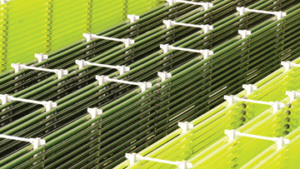
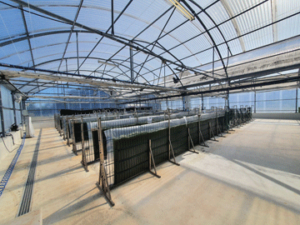
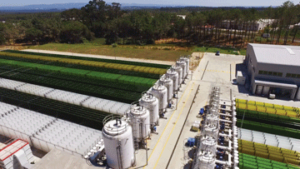
Part of the international biotech Greentech Group, it operates a beyond state-of-the-art production site where microalgae grow under unique, controlled conditions. Already, Allmicroalgae has overcome some of the barriers to the inclusion of microalgae in daily diets on a wide scale, such as colour, smell and taste. For instance, its innovative and unique white and yellow Chlorella vulgaris powders, which are EFSA and GRAS approved as food ingredients and food supplements, are neutral in appearance and have a discrete taste profile that allows them to be incorporated subtly into staple products like bread while still delivering full nutritional value. In bakery and confectionery, ice cream, mayonnaise and snacks, Allmicroalgae’s Yellow Chlorella works well. Its yellow colour makes it a perfect egg substitute with excellent organoleptic results, while White Chlorella can also be integrated into vegan fish formulations and plant-based dairy products.

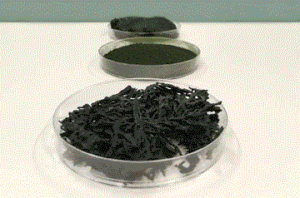
Both ingredients are effective texturising and thickening agents and the yellow variant can be used as a natural food colouring too. Their detoxifying and antioxidant properties also make them ideal for products that support immune health. Both are available as powder and fresh or frozen pastes. To develop these novel and unique products, Allmicroalgae is collaborating with Algarve University, where natural selection is used to isolate microalgae strains with excellent nutritional and organoleptic profiles. Yellow and White Chlorella vulgaris contain 35-45% protein and around 20% dietary fibre. They are a valuable source of Omega 3, 6 and 9 fatty acids, and contain a vast array of minerals and vitamins, including vitamins B2 and B12, zinc and phosphorus. Their nutritional composition allows EU health claims, including maintenance of blood cholesterol levels, normal vision and bone health, reduction of fatigue, cell protection and immune system support. Allmicroalgae also offers Smooth Chlorella, again specially developed to address the technical and organoleptic challenges of food formulation. Its light green appearance and mild algal taste and aroma make it ideal for savoury applications like sauces, pasties, pasta and sausages. Smooth Chlorella has a 25% protein content, while Organic Premium Chlorella vulgaris (PT-BIO-03) has a >55% protein content and a chlorophyll content of >3 per cent. Also in the Allmicroalgae portfolio is Organic Spirulina (PT-BIO-03).
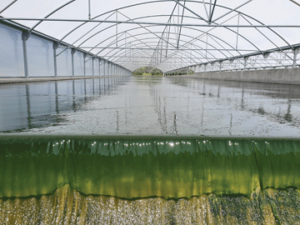
Derived from Arthrospira platensis, it is available in paste, powder, nibs and flakes. Rich in protein (>55-60%) and dietary fibre, it contains all essential amino acids, plus phycocyanin (18-45 per cent), iron, vitamin B12 and Omega 3 fatty acids. Its mild flavour suits a wide variety of foods and drinks, such as baked goods, pasta, juices, smoothies and fermented beverages. The nibs are a perfect topping for ice cream, yoghurt, salad and cheese. Using gentle traditional processing techniques such as solar drying, Allmicroalgae maintains Spirulina’s valuable nutritional profile and bioactive properties.
These backed-by-science benefits include anti-fatigue effects[6] and support for type 2 diabetes treatments, anaemia, pulmonary diseases, muscle and skeletal health.[7] In children, an improvement of fine motor skills, concentration and cognition can also be expected.[8] Keen to expand the reach of microalgae, Allmicroalgae recently collaborated with Algaplus, a Portugal-based pioneer in the production of macroalgae from seaweed, to combine the benefits of micro and macroalgae in one unique blended product – Algaessence®. Algaessence is an Organic powder (PT-BIO-03) comprising Chlorella vulgaris, Fucus vesiculosus and Ulva rigida. Rich in protein and dietary fibre, high in vitamin B12, Omega 3, iodine, iron and magnesium, and low in saturated fats, it is ideal for fortification of milkshakes, juices, soups, sauces, yoghurts and fruit-based products.
Future proof
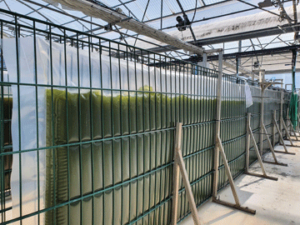
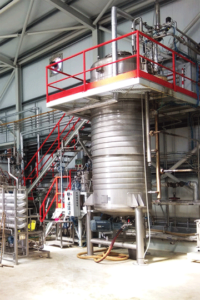
“We work on what we believe to be part of a global sustainable solution and continue to conduct research that will allow food producers around the world to unlock the full potential of microalgae biochemistry,” says Joana Laranjeira, Allmicroalgae R&D and Plant Manager. Allmicroalgae has one of the largest micro-algae production sites in Europe, where fermenters, green panels, photobioreactors and open raceways enable production on a large scale. All products are free from gluten, lactose, nuts, additives, soy and GMO, perchlorates, and pathogenic flora such as Bacillus cereus, and processed without the use of fertilisers, pesticides and irradiation. With a commitment to transparent operations and the highest safety standards, Allmicroalgae is certified for GMP, GMP+, European Organic Production, Halal, Kosher, ISO 22000, ISO 9001 and ISO 14001.
References:
1 https://proveg.com/wp-content/uploads/2021/11/Final-webinar-slides_Smart-Protein-European-Consumer-Survey.pdf [Last accessed 24 March 2022]
2 https://plantbasedfoodalliance.eu/wp-content/uploads/2021/10/EAPF-statement-COP26_FV.pdf [Last accessed 04 April 2022]
3 https://globalnutritionreport.org/ [Last accessed 01 April 2022]
4 https://www.pro-future.eu/microalgae [Last accessed 03 April 2022]
5 Cultured Microalgae for the Food Industry, Rodríguez-Roque et al. Academic Press, 2021. https://www.sciencedirect.com/ science/article/pii/B978012821080200006X [Last accessed 06 April 2022]
6 Johnson M. et al, A randomized, double blind, placebo controlled study of spirulina supplementation on indices of mental and physical fatigue in men. Int J Food Sci Nutr. 2016;67(2): 203-6. https://pubmed.ncbi.nlm.nih.gov/26888417/ [Last accessed 06 April 2022]
7 Wu, Q et al. The antioxidant, immunomodulatory, and anti-inflammatory activities of Spirulina: an overview. Arch Toxicol. 2016 Aug;90(8):1817-40. https://pubmed.ncbi.nlm.nih.gov/27259333/ [Last accessed 06 April 2022]
8 Sinha S, Patro N and Patro IK (2018) Maternal Protein Malnutrition: Current and Future Perspectives of Spirulina Supplementation in Neuroprotection. Front. Neurosci. 2018; 12: 966. https://www.ncbi.nlm.nih.gov/pmc/articles/PMC6305321/ [Last accessed 11 April 2022]

ALLMICROALGAE – Natural Products, SA
Joana Laranjeira da Silva
Rua 25 de Abril, s/n, Pataias – Gare, 2445 – 413 PATAIAS, Portugal
Mob: +351 93 9966886
Tel: +351 300 010 873
Email: info@allmicroalgae.com