Flexitarians drive innovation in meat and dairy alternatives
In recent years the plant-based trend has moved from being niche into the mainstream, with nearly 1 in 2 consumers across the globe now interested in plant-based foods and beverages[1]. New research[1] shows that flexitarian consumers are driving the demand for plant-based food. They are especially interested in transparent labels, sustainability, health and food adventures. Here Olivier Chevalier, Senior Product Manager Functional Proteins at BENEO, discusses how demand has shifted, the improved taste and texture profiles manufacturers are requiring and how functional ingredients are part of the solution. Reducing meat and dairy is now well and truly on consumer agendas across the globe. BENEO’s latest plant-based consumer survey[1] shows that one in four consumers globally now call themselves flexitarians, and only 7% across the world (11% in the UK) identify themselves as vegan, vegetarian or pescatarian[1]. As flexitarians are now the most important target group for manufacturers of plant-based products, it is important to know what is driving their purchasing in order to effectively tap into this trend. According to BENEO’s research[1], almost 6 in 10 people are now paying attention to their meat consumption, while more than 3 in 10 are choosing to limit their dairy consumption. When it comes to those who call themselves flexitarians, approximately half buy alternatives to meat (45%) and dairy (49%), with almost 1 in 3 also buying plant-based sweets like chocolate (32%). However, there is room for more growth amongst flexitarian consumers, with an additional third interested in buying dairy and meat alternatives in the future and 42% wanting to explore sweets alternatives.
Key drivers for flexitarian repeat purchasing
Understanding the key motivations and expectations for plant-based purchasing are vital for product development and success in a market that is rapidly growing. According to the BENEO plant-based survey, helping consumers take care of their body, providing variety to their diet and the taste of the product are key to repeat purchasing success. BENEO’s consumer study[1] revealed value-added insights into consumer expectations for different plant-based categories. The top drivers for flexitarian purchasing for meat alternatives include bringing variety to the consumer’s diet, being healthy and helping them take care of their body. Animal welfare is also a strong motivator. Similarly, for flexitarians purchasing dairy alternatives, taking care of their body is a key driver, as is the natural origins of the ingredients used in the product, as well as supporting a well-balanced diet. Finally, for flexitarians looking to purchase plant-based bakery and sweets, the top drivers are that the ingredients used are natural, that they help consumers take care of their bodies and that they bring variety to their diet. Not surprisingly, for all the categories, the plant-based alternative’s taste is also a key driver to repeat purchase.
Preferred nutritional claims
Alongside these key motivators that are encouraging flexitarian repeat-purchasing of plant-based products, a range of nutritional claims are also proving popular. When it comes to meat alternatives the top claim is ‘natural ingredients’, followed by ‘low in fat’, ‘low environmental impact’ and ‘additive-free’. For dairy plant-based alternative purchasing the top claim is again ‘natural ingredients’, but this is followed by ‘easy-to-digest’, ‘additive free’ and ‘plant-based’. For plant-based bakery and sweets, ‘natural ingredients’ remains the primary claim for flexitarians, followed by ‘low in sugar’, ‘low in fat’ and ‘low environmental impact’. For all plant-based applications, delivering a better nutritional profile is crucial and brands need to build their ‘better-for-you’ credentials to convince flexitarians across the globe. It is therefore no surprise that on-pack messaging that re-enforces clean and cleaner label priorities is proving popular.
© Toos Vergote
Future gazing
It isn’t just getting the right on-pack messaging that is important. Flexitarian consumers are also looking to producers to deliver more excitement and adventure – in the right format – for their plant-based eating. For example, convenience is key, with 73% of UK meat substitute consumers saying that they want more ready-to-eat versions[2], while almost half of European consumers are interested in hybrid format products that combine meat and plant-based proteins[1]. For those interested in plant-based dairy alternatives, matching the taste and texture of dairy is key[1] and for plant-based chocolates, flexitarian consumers are wanting the brands they buy to excite and stimulate the senses with high quality, trusted ingredients[1].
Overcoming sensory barriers
With taste such an important buying incentive for flexitarians, producers need to choose high quality ingredients that have a clean, neutral taste for their meat, dairy and chocolate alternative product development. In the past, the taste of plant proteins had a limiting effect on their appeal. However, thanks to increasing efforts in new product development, companies such as BENEO have developed high quality plant proteins with a neutral taste and other technical benefits, that deliver in terms of both taste and texture.
Wheat ingredients
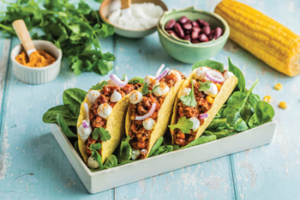
As well as having a neutral taste, wheat proteins can deliver a variety of textures in a wide range of meat-free applications. Wheat protein is also an excellent source of many essential amino acids (such as cysteine, méthionine, phenylalanine, tyrosine and tryptophane). As such, wheat-based protein is one of the most promising meat substitutes for meat-free burgers, nuggets and vegetarian sausages to name but a few. In BENEO’s research, 66% of flexitarians said that they think wheat is an appealing plant-based source in meat and fish alternatives[1]. BENEO’s original BeneoPro W-Tex textured wheat protein range has been extended to meet changing producer demands. It is popular for creating meat alternatives, as it has a unique texture and an alveolar structure that allows for the development of meat-free juicy products with a meaty texture and a granular, fibrous structure[3]. It also takes only 5 to 15 minutes to hydrate and is convenient to use. Being freeze/thaw stable, it is ideal for challenging processing conditions, such as frozen vegan ready meals, in replacement of minced meat. The latest developed protein of the range, featuring 60% protein on dry matter, has shown great potential in chicken alternative products like nuggets and strips, as it provides a tender texture and juicy mouthfeel.

© Toos Vergote
Rice ingredients
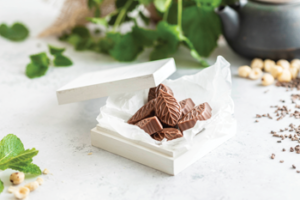
BENEO’s specialty rice ingredients are ideal clean label texturising ingredients in dairy, bakery, and chocolate alternatives. They create stable and creamy textures with a soft, smooth mouthfeel. Their neutral taste makes them easy to combine and eliminates the need to balance out off-flavours. In addition, the neutral colour of rice ingredients doesn’t negatively impact the appearance of end products. In fact, BENEO’s research shows that 7 out of 10 flexitarians see rice as an appealing source for both dairy alternatives and bakery and sweets alternatives[1]. BENEO has also extended its range of rice ingredients to give producers more format options. BENEO’s Nutriz range, which consists of blends of dried rice syrup, rice flour and rice starch, can be used in plant-based dairy and dessert applications, such as chocolate. The Nutriz product range offers food and drink producers clean label and allergen free ingredients that have a slightly sweet taste and can be labelled as rice powder in Europe. With a light colour and neutral taste, this milk powder replacement is ideal for use in dairy-free chocolate and as a bulking agent to make rice based dairy alternatives. It enables the development of plant-based cocoa bars providing a nice taste, good snap, smooth mouthfeel and a good melting behaviour. In addition, using Nutriz in dairy alternative drinks and desserts helps to create a smooth and full-bodied mouthfeel, similar in texture to dairy drinks.
Faba bean ingredients
BENEO has also recently announced a €50 million investment in a new pulse processing site to produce protein rich pulse ingredients for food and animal feed. It will focus initially on protein concentrate, starch-rich flour and hulls from Faba bean. BENEO’s Faba bean protein concentrate and starch-rich flour will be used for protein-enrichment and texture improvement in meat and dairy alternatives, as well as bakery and cereals.
© Toos Vergote
Sustainability message of increasing importance
There is high concern for the environment and animal welfare amongst consumers. In fact, BENEO’s plant-based consumer survey1 shows that four out of every five consumers are concerned about climate change, the environment and animal welfare. Throughout BENEO’s entire supply chain, sustainability is always front of mind. For example, 95% of the wheat used to create BENEO’s textured wheat protein range is sourced from Belgium, France and Germany. Also, BENEO strives to source Faba beans at Farm Sustainability Assessment (FSA) Gold level from German farmers. Furthermore, the Faba bean production process has been chosen for its low energy consumption in comparison to alternative processes; overall contributing to BENEO’s carbon neutrality and sustainability targets.

© Shutterstock: Prostock – studio
Gourmet vegan dishes inspired by BENEO
Pieter-Jan Lint is a leading fine-dining professional vegan chef based in Belgium – and owner of Amaranth, the first gourmet vegan restaurant in Belgium. His passion is letting his diners experience how creative and versatile vegan cuisine can be, and as such, he is always on the lookout for natural ingredients to experiment with. Pieter-Jan has collaborated with BENEO to put its rice, wheat protein and chicory root ingredients through their paces by incorporating them into delicious plant-based foods that offer food manufacturers a glimpse of what is possible with BENEO’s ingredients. The results are impressive. He commented: “The rice ingredients have helped me to develop some amazing vegan cream cheeses and lovely desserts. I have also experimented with combining the rice starch, inulin and wheat protein in a variety of exciting ways. I’ve known about these ingredients but have never combined them before. The ability to rethink recipes and to add these functional ingredients in a creative way has led to some really appealing new vegan dishes. Although there is so much more to discover, I have especially loved the vegan chocolate, creamy praline fillings and ice cream. It’s not every day I get to take a traditional recipe and make it so much more.” With demand for plant-based products continuing to grow and flexitarians driving change, it is only those producers that can meet changing demand that will be able to capitalise fully on this trend. Thanks to the product development work of functional ingredient’s providers such as BENEO there are now a range of options for producers to deliver exciting new textures, tastes and plant-based formats.
Recipe potential
Thanks to BENEO’s portfolio of textured wheat protein and rice ingredients, a wide range of meat- and dairy-alternative recipes are now possible, including the following coffee creamer, dim sum and chocolate recipes:
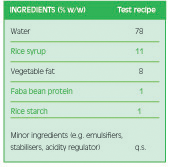
Dairy-free coffee creamer
This recipe offers producers the opportunity to create a dairy-free creamer that adds colour, flavour and a full-bodied mouthfeel to coffee. It contains BENEO’s rice syrup, rice starch and Faba bean protein to enable the creation of the most indulgent dairy-free gourmet coffee.
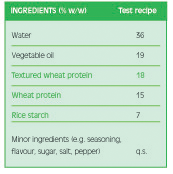
Meat-free siew mai filling
BENEO’s textured wheat protein has been used to replace the minced meat in this Asian siew mai filling recipe. The company’s rice starch has also been used as a natural binder. The result is a juicy, tender dim sum that replicates the soft and tender texture of granular minced meat.
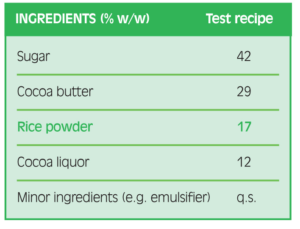
Plant-based cocoa bar
In this recipe, rice powder is used as a milk powder replacement to create a dairy-free cocoa bar with good snap and a smooth mouthfeel.
References:
1 BENEO Global Plant-Based Survey 2021 – Insites Consulting conducted an online quantitative survey in July 2021 in Spain, France,Germany,Poland,UK,US,Brazil, Australia, China and Russia: 1000 consumers/ country = 11,990 consumers in total. [48% gives a score of 7 or more on interest in plant-based nutrition N=11990]
2 Mintel/Kantar profiles Aug 2021, Base UK 999 internet users aged 16+ who eat and buy meat substitutes
3 A structure composed of many very small cavities more or less ordered, like honeycomb

For further information on BENEO and its ingredients, please visit:
www.beneo.com and www.beneo.com/news
Twitter: @_BENEO or www.linkedin.com/company/beneo