Nutriswiss, Coop, HALBA and other partners launch an agroforestry project in Côte d’Ivoire to secure reliable purchase volumes and incomes for more than 200 coconut farmers.
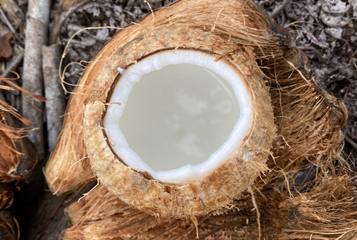
Swiss companies Nutriswiss, Coop, HALBA, Pro Fair Trade AG (PFT), the Research Institute of Organic Agriculture (FiBL) and agroforestry consultancy Ecotop joined forces in 2021. Four years later, first shipments of their dual-certified coconut oil – sourced in part from agroforestry plots – were imported and processed. The raw material stands out for its complete traceability, as well as Fairtrade and EU Organic certification. During the past year, Bio Suisse certification was also obtained. Going forward, this Nutriswiss-refined, top-quality ingredient will be used in HALBA’s chocolate products.
Comprehensive certification marks a key milestone for the joint project, as it promises transparent cultivation and processing conditions, from farm to finished product. Furthermore, deforestation and monoculture are surpassed by the farming principle of dynamic agroforestry, with local smallholder farmers tending existing coconut palms and supplementing them with young plants. Through mixed cultivation, banana, mango and cacao plants are also grown – a transformative combination which helps improve soil fertility. Such close, diverse planting creates a dynamic ecosystem with high biodiversity.
Stable incomes from coconut harvests
It is not only the processing companies that benefit from sustainable, high-quality materials, but also 200-plus coconut farmers who are members of the cooperative in Côte d’Ivoire, and thus guaranteed a stable income from their harvest. Fixed purchase volumes from the Swiss partners and a higher Fairtrade minimum price per coconut compared to the current market rate provide financial security for the smallholders, who can now plan with reliable and consistent market prices. In addition, and in the spirit of self-help, the farmers receive a Fairtrade premium, which they can use to implement projects for the benefit of their own community. Coconuts – and their oils, in particular – are considered a critical raw material at Coop, which is why procurement is subject to strict requirements. “The raw material must preferably be Fairtrade-certified or dual-certified, as well as organic, in order to mitigate the ecological and social risks of cultivation,” explains Aline Roth, Sustainability Project Manager at Coop. Romina Suter, Sustainability Project Manager at HALBA, adds: “With regards to the coconut oil from Côte d’Ivoire, Coop and HALBA have built up the supply chain themselves and are engaged on the ground through project-based activities that go beyond certification. Farmers growing coconut palms in mixed cultivation – as opposed to monoculture – is a first.”
Transparent supply chain and outstanding quality
Thanks to an innovative tracing tool, the organic Fairtrade coconut oil can be tracked across the entire value chain, from smallholder farmers to the manufacturing site of the finished product. The oil is pressed in the country of origin, filled into sealed containers and shipped, thus ensuring quality is maintained throughout. Coconut oil and fat are popular in the food industry, largely because of their favourable melting point. “There are major quality differences on the world market, and there is often uncertainty about growing conditions. However, thanks to the close collaboration of all parties in the supply chain, we now have complete clarity here,” explains Pierre Nording, Head of Procurement at Nutriswiss.
Innovations in Food (& Beverage) Technology is a quarterly magazine distributed globally both in Print and Digital formats. www.innovationsfood.com. Twitter: @Innovfoodtech. Instagram: @innovationsinfoodtechnology. Linkedin: www.linkedin.com/in/terry-prior52