BioProcessing salts –
Designed for alternative
protein production
Recently, the production of alternative protein has expanded as consumer interest and a changing consumer behaviour in non-meat-based protein options is increasing globally. Health and environmental concerns as well as animal welfare have made way for growth of a wide range of alternative-protein options, which is beginning to be explored now.
Innovative food companies in the alternative-proteins market are rolling out new technologies and ingredients to produce next-generation alternative meat that looks, can be prepared, and tastes like conventional meat. To replace classical animal-based proteins, different alternatives offer promising opportunities.
The three pillars of alternative protein industry are:
- Plant-based alternatives
- Alternatives produced via microbial fermentation
- Cultivated meat
Mineral Salts are one key to the economically and innovative production of meat alternatives that meet the requirements of customer perception.
Plant-based Alternatives – Enrichment
Iron and Zinc
The most well established and largest source of alternative protein is produced directly from plants. Popular types for consumers are concentrated or isolated proteins from soy, followed by pea, wheat and several niche types, such as chickpea, rapeseed, and lupin, among others. To produce meat-like alternatives vegetable proteins are mixed with vegetable oils, binding agents for structural completion (e.g. starches, carrageenan, gum, cellulose etc.) and other ingredients for taste and colour. These meat-like alternatives have a similar structure, flavour and protein profile like real meat. Typical products on the market can be found in form of burger patties, nuggets but also deli slices, hot dogs or taco/chilli “meats”.

However, the mineral content of these meat substitutes is often lower in comparison to real meat and meat products. To compensate mineral deficiencies the use of fortified food products containing sufficient amounts of Minerals, especially popular vegetarian and vegan meatless products, can secure an adequate nutrient supply. Soy-based meat substitute products as well as other plant-based proteins are highly processed products that are well-suited for the fortification with Minerals during the production process. They represent a varied matrix that can be refined in nearly any manner and can undergo a nutritional upgrade.
In particular, the enrichment with Iron and Zinc can compensate for the deficiencies in a vegetarian and vegan lifestyle. To compensate the lack of Iron and Zinc the following products by Dr. Paul Lohmann® can be used for the fortification of plant-based meat replacements.
Iron
- Ferric Pyrophosphate (fine or ultrafine)
- Ferrous Fumarate
- Ferrous Gluconate
- Ferrous Citrate
- Ferrous Lactate
Zinc
- Citrate (fine or micronized)
- Zinc Gluconate
- Zinc Sulfate
Alternatives produced via Microbial Fermentation – Nutritious Minerals and Buffering Agents for BioProcessing
Fermentation in general has a long history of producing feeds and foods. Traditionally, it has been used to allow long-term preservation by using microorganisms e.g. trough converting fibres into edible food when fermenting dough to produce bread, or converting milk into cheese.
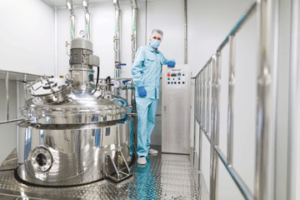
Due to the rise of alternative protein and the need for innovative meat substitutes, the food sector is seeking for revolutionary applications. Now, the role of fermentation has expanded far beyond its historical usage to a much broader range of applications. Growing protein-packed food from microbes with a fraction of the environmental footprint of meat or dairy shows potential that is still largely untapped.[1]
A breakthrough topic within the alternative protein sector could be advanced processes like
- biomass fermentation and
- microbial precision fermentation.
Meat analogues from plain bacterial biomass fermentation uses the reproducing and innately high protein containing microorganisms like bacteria, fungi, yeast and algae as ingredients.[2] In contrast to that, precision fermentation or the recombinant protein production uses encoding genetic material that has been integrated in an efficient host organism (which may be a strain of yeast, fungi, or bacteria) that work like “cell factories”. Instructed to produce substances currently produced by mammals, the final proteins vary from whey and casein to egg white or collagen. Cultivated in fermentation tanks those microbes produce the desired protein in large amounts. This is the same technique as it has been used for decades to produce e.g. insulin or rennet for cheese production.[3] The process of precision fermentation can be treated as an extension of this common technology to make a more diverse set of alternative proteins.
Both techniques are still relatively new to the space of meat alternatives. Production processes and parameters to achieve ideal sensory, functional and nutritional qualities are still being explored.
Cultivated Alternatives – Nutritious Minerals and Buffering Agents for Culture Media
The production of meat – cultured meat – grown in a lab from a few animal cells is a more recent innovation in terms of alternative protein production. This future clean meat is produced by culturing animal cells ex vivo rather than raising and slaughtering animals. This is the reason why cultivated alternatives are turning to be the key for not just the future of alternative protein but maybe even food as a whole.
By using tissue engineering techniques, animal stem cells are introduced into a new, artificial environment, where they are fed and nurtured so they multiply. After differentiation into myofibers, adipocytes, or other mature cell types in muscle tissues, these cells are collected and are identical to conventional meat components – at the cellular level. By using food processing techniques such as molding, colouring and seasoning they are assembled to form edible meat products.[4]
Easier said than done, while many start-ups are yet determining, optimizing steps of the process or trying to scale up, cell-based meat is not yet commercially available on a global scale.[5] From cell line development to innovative cell culture media, scaffolding materials and bioreactor design, there are a number of challenges to meet before cultivated protein alternatives are widely available and cost-competitive.
The production of these protein alternatives in bioreactors requires specific conditions for the culture process yield desired results. Especially nutrients are essential for the cells to grow: Immersed in a culture media in order to proliferate they need all the necessary carbohydrates, fats, proteins, vitamins and last but not least Mineral Salts.[6]
A stable pH-value of the culture media is a crucial requirement influencing the ability how the cells can uptake nutrients and proliferate.[7] For the perfect fit Dr Paul Lohmann® offers a wide range of nutritious Trace Elements and high performance Salts to buffer the media, providing an environment that maintains the structural and physiological integrity of cells in vitro.
Minerals Salts for buffer media for cell culture:
- Mineral Chlorides
- Mineral Sulfates
- Mineral Phosphates
- Mineral Carbonates
- Mineral Citrates
- Mineral Succinates
Trace elements as nutrients in cell culture media:
- Chromium
- Cobalt
- Copper
- Iron
- Iodine
- Manganese
- Molybdenum
- Selenium
- Zinc
Dr. Paul Lohmann® is in a prime position to fully support the food biotech industry as manufacturer with an outstanding track record in the pharma/biotech sector. With more than 135 years of experience in the manufacturing of Mineral Salts critical challenges in creating high performing cell culture media and the efficient production of protein alternatives can be overcome. To accelerate the process of development the Dr. Paul Lohmann® R&D team is working in close collaboration with their clients to identify special requirements.
Benefits of Dr. Paul Lohmann® BioProcessing Salts:
- Safe and simple way to secure your biotechnological operation
- Strictly controlled raw materials and production processes – GMP and FSSC certified production sides
- Consistent and stable product quality
- Highest lot-to-lot consistency
- Controlled microbiological parameters; if needed: Low in Endotoxins
- High performance and solubility
- Low heavy metal content
- Functional Salt Premixes can be developed
- Small volume packaging available
- Food and Pharma grades
- Kosher and Halal certified
- High value Mineral Salts Made in Germany with the possibility to individually adapt product parameters to the customer process
Dr. Paul Lohmann® provides comprehensive support in the development of fortified products. As a specialized manufacturer of high-quality Mineral Salts the product portfolio includes over 400 different Mineral Salts. The company works together with the client in close collaboration starting from the selection of the Minerals, the development of manufacturing processes to the question of health-related labelling.
References:
1 Teng, T. S., Chin, Y. L., Chai, K. F., & Chen, W. N. (2021). Fermentation for future food systems: Precision fermentation can complement the scope and applications of traditional fermentation. EMBO reports, 22(5), e52680.
2 Finnigan, T.J.A. (2011). Mycoprotein: origins, production and properties. In: Woodhead Publishing Series in Food Science, Technology and Nutrition, Handbook of Food Proteins. Eds G.O. Phillips & P.A. Williams. Cambridge, UK: Woodhead Publishing (an imprint of Elsevier). ISBN 9781845697587. Pp. 335-352.
3 Zollman Thomas, O., & Bryant, C. (2021). Don’t Have a Cow, Man: Consumer Acceptance of Animal-Free Dairy Products in Five Countries. Frontiers in Sustainable Food Systems, 5, 223.
4 Guan, X., Lei, Q., Yan, Q., Li, X., Zhou, J., Du, G., & Chen, J. (2021). Trends and ideas in technology, regulation and public acceptance of cultured meat. Future Foods, 100032.
5 https://gfi.org/science/the-science-of-cultivated-meat/
6 Stephens, N., Di Silvio, L., Dunsford, I., Ellis, M., Glencross, A., & Sexton, A. (2018). Bringing cultured meat to market: Technical,
socio-political, and regulatory challenges in cellular agriculture. Trends in food science & technology, 78, 155-166.
7 Allan, S. J., De Bank, P. A., & Ellis, M. J. (2019). Bioprocess design considerations for cultured meat production with a focus on the expansion bioreactor. Frontiers in Sustainable Food Systems, 3, 44.

Dr. Paul Lohmann GmbH & Co. KGaA
Hauptstrasse 2
31860 Emmerthal/Germany
Email: sales@lohmann4minerals.com