Authentic meat
alternatives based on
wheat ingredients
Satisfying both manufacturer and consumer demand
Plant-based alternatives to sausage, burger patties and chicken nuggets are continuing to whet consumer appetites, with sales soaring exponentially. Today, many shoppers are likely to buy something from the veggie shelf out of sheer curiosity. The challenge for manufacturers, however, is in generating repeat purchases, particularly among flexitarians looking to reduce their meat consumption. Products must therefore have an excellent and convincing texture, optimized nutritional values, sustainable raw materials and provide consumers with plenty of choice. For easy implementation and handling, wheat specialist and ingredient supplier Loryma offers customized solutions, and acts as an ideas generator and R&D partner by offering adaptable concepts or single components such as TVP, and texturising and binding agents.

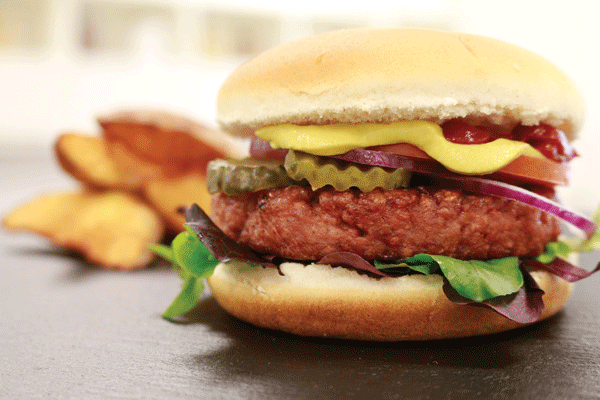
meat-based counterparts Copyright: Crespel & Deiters
Main difference between meat and non-meat
More choice on the shelf offers incentives to shoppers to try meat-free versions of popular dishes. Yet vegetal raw materials cannot be processed in the same way as meat in terms of production technology. This means manufacturers must get involved with the properties of the materials and adapt their processes accordingly, regardless of whether they are involved with meat production and want to expand their range to include vegan products, or are complete newcomers to the production of foods such as meat-free schnitzel and sausage.
Meat has different processing properties to products created from a vegetable base. Raw meat can be processed in many different ways, emulsify fat and water to a certain extent, coagulate under the influence of heat or acid, and form irreversible solid structures when cooked. In contrast, there is no single, plant-based solution that can serve as a starting point for all applications. Meat alternatives are always very specific and intended for a particular use. The challenge is to ensure that the vegetable or grain-based counterpart meets consumer expectations in all relevant product characteristics.
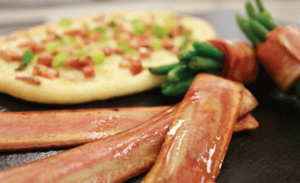
texture Copyright: Crespel & Deiters
Right texture for every application
The type of application influences the choice of the texturising wheat component. The appropriate binder depends on the point of sale – for example, the fresh counter, refrigerated or frozen shelf – and the preparation method.
Textured wheat protein is an ideal main ingredient of vegan burger patties or meatballs and, depending on the intensity of colouring, resembles the look of cooked beef or pork. Fine granules and larger pieces can be combined for an even more authentic mouthfeel for ground meat alternatives.
Innovative extrusion technology allows the wheat proteins to take on a wide variety of shapes. By using specialist extrusion firm ECP which, like Loryma, is part of the Crespel & Deiters Group, excellent quality and control throughout the supply chain is assured.
Furthermore, large and long texturates of the Lory® Tex range, “chunks” or “fibres” form a fibrous structure after hydrogenation, making them suitable for vegan chicken breast strips, for example. Such ready-to-eat products are usually consumed both hot and cold, so the matching binding must be irreversible. This requires a wheat-based binder component that has good cold and hot viscosity from the outset, and creates a stable internal bond (cohesion).
Capitalise on home-cooking trend
Loryma has created two concepts that address those wanting more flexibility when incorporating plant-based products into their cooking routine at home.
Firstly, specific binders help create a “cooking effect”, for example, in the vegetable equivalent of raw minced meat in MAP (Modified Atmosphere Packaging). The raw, soft feel solidifies when heated in the pan by the consumer, changing colour from red to grey-brown to perfectly mimic the original.
Secondly, there are special dry premixes for meat alternatives that can be adapted by manufacturers. The basic blend can be used as the basis for the creation of numerous vegan applications, from plant-based burger patties to cevapcici, breaded cutlets and nuggets. Preparation is simple: the consumer only needs a bowl in which to combine the premix with water. The resulting mass can then be kneaded and shaped into the desired form. Fresh ingredients such as diced vegetables or herbs can also be added, if desired. The “clean label” and optimised nutritional values are particularly appealing to a health-conscious target group, opening up many creative culinary possibilities. The dry products have a longer shelf life than ready-to-use meat analogues from the chilled counter, and take up less space in transit. As a result, they reduce food waste and cause fewer transport emissions in comparison.
Perfectly breaded
As an ideal partner for vegan schnitzel or nuggets based on wheat ingredients, Loryma also offers a coating portfolio. The sensory quality of batter is vital for both meat and meat-free products – it should be crispy and adhere firmly to the food, yet resistant to the production and packaging process. Loryma’s wheat-based adhesion systems are optimised for a wide variety of applications and product surfaces. Wet batters and dustings are available, all of which support various textured coatings such as breadcrumbs, cornflakes and doughs. During the deep-frying process, bubbles of steam form between the breading and the product surface, which weakens the bond and reduces product quality. Specially developed wheat starches can counteract this, ensuring reliable adhesion throughout the entire process. The breading structure is gas permeable thus preventing the formation of steam bubbles.
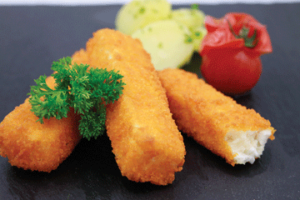
Challenge mastered: Vegan fish alternative
Plant-based fish alternatives are currently not as popular as meat alternatives, but looking to the future, demand in this category is expected to grow. This is due in part to growing awareness of issues such as overfished seas, pollutants and microplastics. Vegan cod, salmon, tuna, baked fish and fish fingers are just a few examples of products that can be created with wheat-based ingredients. All components are flavour-neutral, so the desired fish taste can be individualised with the addition of specific flavours.
The wheat-based fish products consist of two components: With Lory® Stab, a functional mixture, the species-typical muscle tissue of fish meat is reproduced, while a Lory® Bind compound provides inner binding and specific mouthfeel. Firmness can be modified via the content of the bind component. Numerous variations are possible through Loryma’s product range, for example, extruded wheat proteins from the Lory® Tex range replicate the precise texture of tuna. Supplemented by valuable vegetable oils, this creates a nutrition-rich, high-quality product.
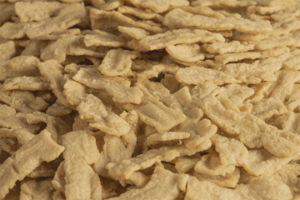
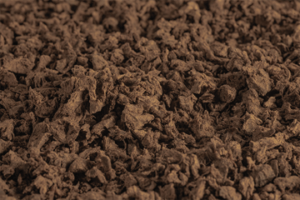
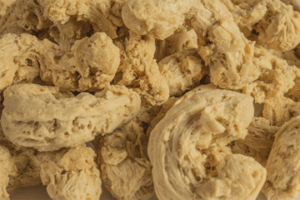
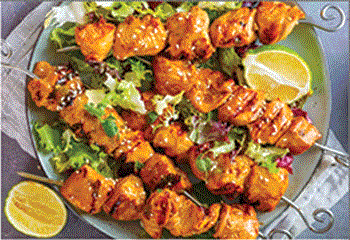
By combining different shapes and colours together, Loryma’s range of texturates ensures that authentic end results can be achieved for vegan schnitzel, sausage and burger substitutes, among others Copyright: Crespel & Deiters
Convincing with quality
Loryma, a subsidiary of the Crespel & Deiters Group, one of the leading wheat processors in Europe, has specialised in functional ingredients for the food industry for over 40 years. These improve product properties and processes in various branches of industry. Loryma is not only a raw material supplier and provider of wheat texturates, starch blends and functional blends, but also develops complete solutions and concepts for manufacturers, and offers comprehensive product service. At the Zwingenberg site near Frankfurt, a state-of-the-art technical centre was put into operation last year, which houses, among other things, a test kitchen and a sausage kitchen as well as the latest equipment for the production of meat products. This is where Loryma’s innovations are created: Binding systems, texturisers, concepts for boiled and fried sausages, and breadings – all based on wheat and for both meat and meat-free applications. The expertise gained by specialising in the processing of wheat together with years of experience as a supplier to the meat industry is passed on by the team to its customers as a service partner.
In the design of the functional components, Loryma pays particular attention to easy and fail-free handling, in order to combine the demands of consumers with best industry practice. The functional solutions are largely flavour-neutral without off-taste, and can be individually flavoured. The starch- and protein-based product ranges are designed according to a modular principle, allowing creative concepts with maximum flexibility.
All solutions are designed to be processed with the usual process equipment, i.e. scalded, cut, minced, mixed, cut, shaped and cooked. That’s why the first step Loryma takes with its customers is to take stock of production conditions and existing technologies. Then, together, they discuss the form in which the final product will be distributed, packaged, stored and consumed. Where necessary, Loryma can also take over the technological-functional area of product development, and provide support for practical implementation.
Plus-points on the label
Product labels, including nutritional values, are increasingly influencing purchasing decisions. The pandemic and the resulting heightened health awareness have further driven this trend. With Loryma’s clean label binding system, it is possible to produce meat alternatives with an optimised nutritional profile and thus stand out in the market. Due to the high protein content of the textured wheat protein – approx. 57% to 65%, depending on the recipe – it is even possible to label the product as “high-protein”. The combination of wheat and field bean proteins improves the quality of the proteins and their biological value, in terms of composition of amino acids.
Wheat as an ingredient also has a predominantly positive reputation and is associated with naturalness. Loryma’s ingredients offer functional added value and have a positive effect on the feel of the end product and on processing, while being label-friendly.
Versatile and sustainable: wheat as a raw material
In view of the growing world population and the resulting increase in protein demand, “plant-based” foods continue to grow in importance. Plant-based meat alternatives have a significantly lower carbon footprint than animal protein, and use less water and land resources. Wheat already accounts for about 20% of global calorie consumption and is an indispensable part of the diet the world over. Making good use of the grain’s functional properties offers a lot of potential for the future. The Loryma portfolio is based on GMO-free wheat grown exclusively in the EU, 75% of which comes from Germany. The raw material covers comparatively short distances, which minimises transport emissions. The Crespel & Deiters Group recycles every grain of wheat with a yield of 99%, which ensures responsible use of the raw material.
The food industry is tasked with using its expertise and innovation to offer healthy new solutions that respond flexibly to consumer needs, while conserving resources and the environment. Wheat texturates and functional ingredients easily and effectively meet those challenges.
Interview with Norbert Klein, Head of R&D Loryma
Q: Meat from the test tube, meatballs made from insects, wheat-based schnitzel – what do you think has the best chance of surviving on the market in the future?
Norbert Klein: Reducing meat consumption is a major challenge which all players, consumers, the food industry and politics must work
together to address. In the long run, more sustainable concepts will no doubt become established. In terms of naturalness, both in terms of raw materials and processing, wheat-based meat alternatives can score highly.
Consumer acceptance is strong and that is why I am confident that the market will continue to grow steadily. Unlike other plant-based ingredients, Loryma ingredients have no off-flavour and produce the typical texture and bite that consumers expect from meat.
Q: What is the biggest hurdle meat producers must overcome when switching to veggie products?
Norbert Klein: The biggest obstacle is often that traditional meat processors do not trust themselves to take this step, although the
prerequisites are ideal: they know the preferences of meat fans and have the distribution channels, production facilities, connections and know-how in terms of spices and flavours.
Nevertheless, a rethink is required: the sensory characteristics must be clearly defined in order to find the raw materials and define the production process. Often, the production of plant-based alternatives requires several successive manufacturing steps and process parameters must therefore be precisely adhered to. The market for meat alternatives is still very young and the industry is in the discovery phase, but we are doing our best to help it to the next level.
Q: How do you decide which product innovation to tackle next?
Norbert Klein: We always keep our ear to the ground in order to be able to respond to current trends. That’s why the focus of our product development is currently on meat alternatives. Here, the demand is immense, both for complete solutions and for individual components such as our wheat textures, which can be used in a variety of ways.
However, the inspiration comes not only from the outside, but also from ourselves or our group of companies. As we have an influence on every single processing step in the company and also conduct basic research, we know “our” raw material wheat and its possibilities very well. Therefore, we are also aware of its capabilities, which continually inspire us to explore new processing methods.
Contact details:

Beate Ehrhard
Head of Marketing & Communications
Loryma
beate.ehrhard@crespeldeitersgroup.com