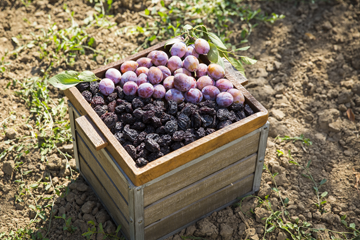
Ethical Naturals Inc. (ENI), maker of Cranberex®, a high potency extract standardized to cranberry’s active A-Type PAC’s, follows the annual cranberry harvest carefully. In 2023, the cranberry harvest in the northeastern states of the US was down about 5.4% as compared to 2022, however, good weather and growing conditions led to a 17.5% increase in the Oregon harvest1. Cal Bewicke, CEO of Ethical Naturals, says the increased Oregon harvest is good news because cranberries grown in that state make better quality ingredients.
“2022 was a difficult year for supply of the highest-grade berries and key suppliers were running low on extracts by the end of 2023,” Cal said. “Though demand for the high-grade material continues to grow, we see more favorable pricing and supply through 2024 due to the robust harvest in Oregon.”
Oregon’s first commercial cranberry farm was established in 1885 in Coos County by a grower who migrated there from Massachusetts and brought cranberry cuttings with him. Coos and neighboring Curry County are where Oregon’s cranberry industry still thrives today. Though Oregon only produces about 5% of the nation’s cranberry harvest (the bulk is produced in Wisconsin and Massachusetts), the berries produced in Oregon have particular characteristics that are especially valued for high-grade cranberry extract production: the coast’s temperate climate and long growing season give Oregon cranberries a deeper red color and higher PAC (proanthocyanin) level than those grown in other states2.
Having used Oregon cranberries for their Cranberex® extract for over eight years, ENI recently produced a video , entitled ‘From Field to Finished Product®’ about the Oregon harvest, and the transformation of the berries into extract standardized for cranberry’s unique A-Type PAC’s. These are now acknowledged as the unique constituents in cranberry responsible for its AAA (Anti-Adhesion Activity) and resulting UTH benefits3.
[1] https://www.ers.usda.gov/data-products/chart-gallery/gallery/chart-detail/?chartId=107902 [2]American Herbal Pharmacopoeia and Therapeutic Compendium (2016). Cranberry Fruit, Vaccinium macrocarpon Aiton, Revision. Page 15 [3] Howell, A.B., et al. (2005). A-type cranberry proanthocyanidins and uropathogenic bacterial anti-adhesion activity. Phytochemistry 66, 2281–2291.
Innovations in Food (& Beverage) Technology is a quarterly magazine distributed globally both in Print and Digital formats. www.innovationsfood.com. Twitter: @Innovfoodtech. Instagram: @innovationsinfoodtechnology. Linkedin: www.linkedin.com/in/terry-prior52