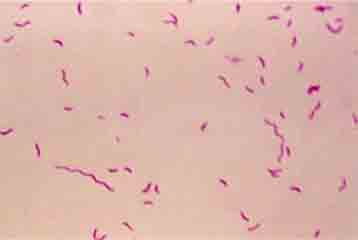
A new study from DTU National Food Institute provides an overview of research on the burden of foodborne diseases in Denmark, ranking for the first time the disease risks from both foodborne pathogens and chemicals based on their impact on public health. The research shows that campylobacter was the leading cause of the burden of foodborne diseases I Denmark.
In 2015, DTU National Food Institute launched a national initiative to rank the hazards of foodborne diseases in Denmark, aiming to investigate the burden of diseases caused by different pathogens and chemicals in food. This project followed an initiative by the World Health Organization (WHO), which, in the same year, released the first estimates of global foodborne disease hazards. Now, researchers from DTU National Food Institute can, for the first time, provide answers to how foodborne diseases in Denmark affect public health in relation to each other, whether they are caused by chemicals or disease-causing bacteria (pathogens).
The research shows the burden of disease resulting from 14 different food hazards, which collectively were estimated to lead to 133,388 cases of illness and 90 deaths in 2019.
“Our estimates show that campylobacter was the leading cause of the burden of foodborne diseases in Denmark, says Sara Monteiro Pires, senior researcher at DTU National Food Institute.
Campylobacter was followed by lead, peanut allergy and mercury, and the following five positions on the ranking include Salmonella, Listeria, E-coli (STEC), and congenital toxoplasmosis.
The research is based on the year 2019, which is the most recent year without disruption of data from the Covid-19 pandemic.
Useful for both policymakers and authorities
The ranking is useful for politicians and authorities, e.g. the Danish Veterinary and Food Administration, to prioritise various safety initiatives aimed at reducing the population’s risk of foodborne diseases.
The fact that estimates show that the leading causes of foodborne diseases in Denmark include both pathogens and chemicals suggests that politicians and authorities can consider to diversify food safety strategies to tackle different issues. The research can also be used to monitor the effectiveness of these efforts.
“If we choose to regularly calculate the impact of foodborne diseases at a population level in Denmark, it will also be possible to continuously assess whether the food safety initiatives implemented by authorities to reduce the disease burden are effective,” says Sara Pires.
A standard measurement method is required to rank the hazards of foodborne diseases
The burden of foodborne diseases is measured in disability-adjusted life years (DALYs). The DALY is a measure of how many years of life a population loses when part of the population lives with reduced quality of life and/or die earlier than expected due to illness.
“Pathogens and chemicals present in foods can lead to many different diseases, from mild and short-duration health outcomes such as diarrhoea, over chronic or life-long such as certain neurological diseases, to very severe outcomes like cancer or even death. These elements are all incorporated in the metric of DALYs, which are an international accepted standard for calculating disease burden in general – not just for foodborne diseases,” says Sara Pires.
“We estimated that campylobacter resulted in the loss of 1,285 years of healthy life in a single year in 2019, which was largely driven by a high number of cases in the population. Other hazards caused a low number of cases, but very severe disease, which also meant a high burden at individual and population-levels,” says Sara Pires.
The uncertainty of all measurements was quantified in the study and the researchers observed that estimates of the burden of disease caused by foodborne chemicals had a larger uncertainty compared to the estimates for foodborne pathogens. Researchers at DTU National Food Institute work extensively to improve methods to measure the impact of chemicals in food on public health.
“Several other countries are interested in conducting national burden of foodborne disease studies to provide evidence to prioritize food safety strategies. The experiences and lessons learned from our study can be useful for other countries,” says Sara Pires.
Innovations in Food (& Beverage) Technology is a quarterly magazine distributed globally both in Print and Digital formats. www.innovationsfood.com. Twitter: @Innovfoodtech. Instagram: @innovationsinfoodtechnology. Linkedin: www.linkedin.com/in/terry-prior52